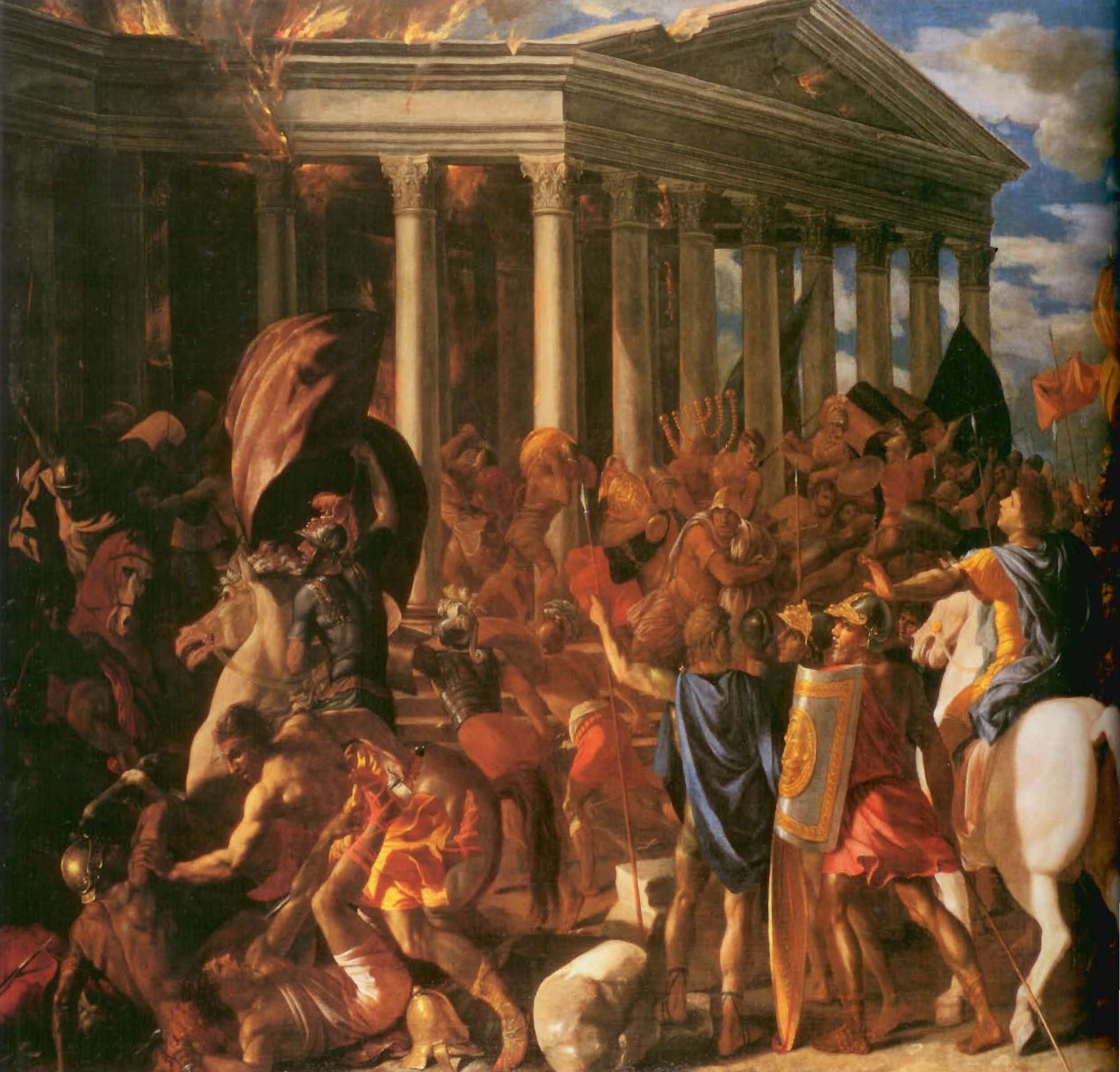
When was the temple destroyed in Jerusalem? This question has captivated historians, religious scholars, and archaeologists for centuries. The destruction of the Temple in Jerusalem holds immense significance in Jewish, Christian, and Islamic traditions, and its impact continues to resonate today.
In this comprehensive guide, we will delve into the historical, religious, and cultural implications of this pivotal event.
The Temple in Jerusalem was the central place of worship for the Jewish people and a symbol of their covenant with God. Its destruction has had profound consequences for Jewish identity and religious practices, as well as for the development of Christianity and Islam.
Join us as we explore the fascinating history and enduring legacy of the Temple in Jerusalem.
Historical Context

The Temple in Jerusalem, also known as the First Temple, held immense religious and cultural significance for the Jewish people. It served as the central place of worship, a symbol of God’s presence among his people, and a repository of sacred artifacts, including the Ark of the Covenant.
However, the Temple’s existence was often intertwined with political and religious tensions. It became a focal point of conflict between the Jews and other nations, including the Babylonians and the Romans.
Significance of the Temple
- The Temple was the central place of worship for the Jewish people.
- It was believed to be the dwelling place of God on earth.
- It housed the Ark of the Covenant, which contained the Ten Commandments.
Political and Religious Tensions
- The Temple was a symbol of Jewish independence and sovereignty.
- Its destruction by the Babylonians in 586 BCE was a major blow to Jewish morale.
- The Temple’s reconstruction under the Persians was a sign of Jewish resilience.
- The Temple’s destruction by the Romans in 70 CE was a devastating event for the Jewish people.
First Destruction

The First Destruction of the Temple in Jerusalem occurred in 586 BCE at the hands of the Babylonian army led by King Nebuchadnezzar II. The destruction marked a pivotal moment in Jewish history and had profound religious and cultural consequences.
Circumstances Leading to the Destruction
The destruction of the Temple was the culmination of a series of events that began with the Babylonian conquest of Judah in 597 BCE. The Babylonian king, Nebuchadnezzar II, had besieged Jerusalem and forced King Jehoiachin to surrender. Jehoiachin and a large portion of the Judean population were taken into exile in Babylon.
Despite the exile, the Jewish people continued to worship at the Temple in Jerusalem. However, the Babylonians grew increasingly suspicious of the Jews and their loyalty to the Babylonian Empire. In 589 BCE, Nebuchadnezzar returned to Jerusalem and laid siege to the city once again.
Destruction of the Temple
After a lengthy siege, the Babylonians breached the walls of Jerusalem in 586 BCE. The Temple was looted and burned to the ground, and the city was destroyed. The destruction of the Temple was a devastating blow to the Jewish people and their religious practices.
Impact of the Destruction
The destruction of the Temple had a profound impact on the Jewish people. The Temple was the center of Jewish religious life, and its destruction left a void in the community. The Jews were forced to worship in makeshift synagogues, and their religious practices were severely disrupted.
The destruction of the Temple also had a significant cultural impact. The Temple was a symbol of Jewish identity and nationhood, and its destruction weakened the sense of unity among the Jewish people. The exile in Babylon also led to the development of new Jewish traditions and practices, which would shape the future of Judaism.
Second Destruction: When Was The Temple Destroyed In Jerusalem
The Second Destruction of the Temple in Jerusalem occurred in 70 CE as a result of the Roman conquest of Judea. This event marked a significant turning point in Jewish history and had profound religious and cultural implications.
Roman Conquest of Judea
The Roman conquest of Judea began in 66 CE when the Roman governor of Syria, Cestius Gallus, marched on Jerusalem to quell a Jewish revolt. However, the Jewish rebels successfully repelled Gallus’s forces, emboldening them and leading to a wider rebellion.
In 67 CE, the Roman emperor Nero sent a new general, Vespasian, to suppress the revolt. Vespasian’s forces gradually gained control of Judea, capturing major cities such as Tiberias and Jericho.
Siege of Jerusalem
In 69 CE, Vespasian’s son, Titus, took command of the Roman army and laid siege to Jerusalem. The siege lasted for several months, during which time the Romans used siege towers, battering rams, and other siege engines to break through the city walls.
The Jewish defenders fought fiercely, but they were outnumbered and outgunned. In August 70 CE, the Romans finally breached the city walls and entered Jerusalem. The Temple was set on fire and destroyed, along with much of the rest of the city.
Motivations and Tactics
The Romans were motivated to destroy the Temple for several reasons. First, they saw it as a symbol of Jewish resistance and a potential rallying point for future revolts. Second, they wanted to punish the Jews for their rebellion and to make an example of them to other conquered peoples.
The temple in Jerusalem was destroyed in 70 CE, but if you’re experiencing pain in your temples when you touch them, it’s more likely due to a different cause. For more information on why your temples might be hurting, click here.
However, if you’re still curious about the destruction of the temple in Jerusalem, feel free to research further.
The Romans used a variety of tactics in the siege of Jerusalem, including siege towers, battering rams, and catapults. They also used psychological warfare, such as threats and propaganda, to demoralize the Jewish defenders.
Religious Significance
The Temple in Jerusalem held immense religious significance for the Jewish people. It served as the central hub for Jewish worship and religious rituals, embodying the presence of God on earth. Its destruction had a profound impact on Jewish theology and religious practices.
Religious Ceremonies and Festivals
The Temple was the site of various religious ceremonies and festivals that marked important events in the Jewish calendar. Some notable ones include:
- Yom Kippur (Day of Atonement):An annual ritual to cleanse the people of their sins and restore their relationship with God.
- Passover:Commemorated the Exodus from Egypt and marked the beginning of the Jewish year.
- Sukkot (Festival of Tabernacles):Celebrated the harvest and commemorated the Israelites’ wandering in the desert.
Significance in Jewish Theology
The Temple played a pivotal role in shaping Jewish identity and community. It symbolized the covenant between God and the Jewish people and was seen as the physical manifestation of God’s presence on earth. Its destruction in 586 BCE and 70 CE marked devastating blows to the Jewish people, leading to a profound re-evaluation of their faith and relationship with God.
“The Temple was the physical manifestation of God’s presence on earth. Its destruction was a devastating blow to the Jewish people, but it also led to a deepening of their faith and a renewed commitment to their covenant with God.”
Archaeological Evidence
Archaeological excavations and discoveries have played a crucial role in understanding the history and destruction of the Temple in Jerusalem. Excavations at the Temple Mount and the discovery of the Western Wall have provided valuable insights into the Temple’s physical appearance, layout, and religious significance.
Excavations at the Temple Mount
Extensive excavations at the Temple Mount, the site of the Temple, have uncovered numerous artifacts and structures that shed light on the Temple’s history. Excavations conducted by archaeologists like Charles Warren, Kathleen Kenyon, and Benjamin Mazar have revealed the remains of the Temple’s walls, courtyards, and other architectural features.
The discovery of the Southern Wall, also known as the Western Wall, has been particularly significant. This massive wall, which is still standing today, is believed to be a remnant of the Temple’s outer wall. The Western Wall has become a symbol of Jewish heritage and a popular pilgrimage site.
Evidence for Destruction
Archaeological findings provide strong evidence for the destruction of the Temple by the Romans in 70 CE. Excavations have uncovered layers of burnt debris and charred remains, indicating that the Temple was set ablaze. Coins and pottery fragments found among the ruins suggest that the destruction occurred during the reign of Emperor Vespasian.
The discovery of the “Titus Arch” in Rome, which depicts the Roman victory over Jerusalem and the looting of the Temple, further supports the historical account of the Temple’s destruction.
Reconstructing the Temple
Archaeological evidence has played a vital role in reconstructing the Temple’s physical appearance and layout. Excavations have revealed the dimensions of the Temple’s courtyards, the location of the altar, and the placement of other structures.
Based on these findings, scholars have created detailed models and reconstructions of the Temple, providing insights into its architectural grandeur and religious significance.
Challenges and Controversies
Archaeological excavations at the Temple Mount have been accompanied by challenges and controversies. The site is considered sacred by both Jews and Muslims, and excavations have sometimes been met with protests and opposition.
There have also been concerns about the ethical implications of excavating a site of such religious and cultural significance. Archaeologists have been criticized for potentially damaging or altering the site, which could have implications for future generations.
Historical Sources
Various historical sources provide information about the destruction of the Temple in Jerusalem. These include biblical texts, Roman accounts, and Jewish writings.
The reliability of these sources varies. Biblical texts, while offering valuable insights, may be influenced by theological or political agendas. Roman accounts, written by historians who witnessed or heard about the event, provide a historical perspective, but may be biased towards the Roman viewpoint.
Jewish writings, penned by historians and scholars who lived during or after the destruction, offer a Jewish perspective but may also exhibit bias.
Biblical Texts
Biblical texts, such as the books of Kings and Chronicles, provide detailed accounts of the destruction of the First Temple by the Babylonians in 586 BCE and the Second Temple by the Romans in 70 CE. These texts offer religious and historical insights, but their reliability may be limited by theological or political agendas.
Roman Accounts
Roman accounts, such as those written by Josephus and Tacitus, provide valuable historical perspectives on the destruction of the Temple. These accounts offer eyewitness accounts or firsthand information from individuals who witnessed or heard about the event. However, these accounts may be biased towards the Roman perspective and may not fully represent the Jewish experience.
Jewish Writings
Jewish writings, such as the works of Josephus and the Talmud, offer religious and historical insights into the destruction of the Temple. These writings provide a Jewish perspective on the event and its aftermath. However, they may be biased towards the Jewish perspective and may not fully represent the Roman viewpoint.
Tacitus on the Destruction of the Temple
“The Temple of Jerusalem, renowned for its wealth and the superstition of the nation, was burned to the ground.” (Tacitus, The Histories, Book V)
This quote from Tacitus reflects the Roman perspective on the destruction of the Temple. Tacitus emphasizes the wealth and superstition associated with the Temple, suggesting a Roman view of the Jewish religion as excessive and irrational. The use of the term “burned to the ground” conveys the devastating nature of the destruction.
Contemporary Perspectives
The destruction of the Temple in Jerusalem remains a subject of ongoing debate and diverse interpretations among historians, religious scholars, and archaeologists.
These perspectives vary based on religious beliefs, historical interpretations, and the analysis of archaeological evidence. Some key perspectives include:
Historical Interpretations
- Biblical Accounts:The Bible provides detailed accounts of the Temple’s destruction in both the Old and New Testaments, attributing it to divine punishment for the sins of the Jewish people.
- Roman Accounts:Roman historians, such as Josephus, offer eyewitness accounts of the siege and destruction of Jerusalem, providing insights into the military and political factors involved.
- Archaeological Evidence:Archaeological excavations have uncovered physical evidence of the Temple’s destruction, including burnt debris and destroyed artifacts, corroborating the historical accounts.
Religious Significance
- Jewish Perspective:For Jews, the Temple was the holiest site in their religion and its destruction a profound loss. The event is commemorated in Jewish mourning rituals and prayers.
- Christian Perspective:Christians view the Temple’s destruction as a fulfillment of prophecies in the New Testament and a symbol of the end of the old covenant and the establishment of the new.
li> Islamic Perspective:Muslims believe that the Temple was a sacred site visited by the Prophet Muhammad during his Night Journey and that its destruction was a divine act.
– Identify the key cultural and artistic movements that have been influenced by the destruction of the Temple.
The destruction of the Temple in Jerusalem in 70 CE has had a profound impact on various cultures and artistic movements throughout history. The loss of the Temple, a central symbol of Jewish identity and spirituality, has left an enduring mark on religious, cultural, and artistic expressions.One of the most significant cultural movements influenced by the Temple’s destruction is the development of Rabbinic Judaism.
After the Temple’s destruction, the rabbis emerged as the primary religious leaders and teachers of Judaism. They developed a new form of Judaism that emphasized the study of the Torah and the observance of Jewish law. This new form of Judaism, known as Rabbinic Judaism, became the dominant form of Judaism in the centuries after the Temple’s destruction.
Religious Implications
The destruction of the Temple in Jerusalem had profound religious implications for Judaism, Christianity, and Islam. Each religion interpreted the event through its own theological lens, resulting in distinct beliefs about its significance, its role in salvation, and its future restoration.
Judaism
For Judaism, the destruction of the Temple was a cataclysmic event that shattered the heart of Jewish identity and religious practice. The Temple had been the central focus of Jewish worship and spirituality for centuries, serving as the physical manifestation of God’s presence on earth.
Its destruction left a profound void in Jewish life, forcing Jews to adapt and find new ways to connect with their faith.In the absence of the Temple, rabbis developed new forms of worship and spirituality, emphasizing prayer, study, and ethical conduct.
They established synagogues as communal gathering places for prayer and learning, and they developed new rituals and traditions to commemorate the Temple’s destruction and express their longing for its restoration.The destruction of the Temple also had messianic implications for Judaism.
According to Jewish tradition, the Messiah would come to rebuild the Temple and usher in a new era of peace and prosperity. The destruction of the Temple raised questions about the timing of the Messiah’s arrival and the nature of the messianic age.
Christianity, When was the temple destroyed in jerusalem
For Christianity, the destruction of the Temple was a pivotal event that influenced the development of Christian beliefs about Jesus and the nature of salvation. Early Christians saw the destruction of the Temple as a fulfillment of Jesus’ prophecies and a sign that the old order had passed away and a new era had begun.The destruction of the Temple also played a role in Christian eschatology, or beliefs about the end times.
Some Christian writers and theologians interpreted the destruction of the Temple as a harbinger of the coming apocalypse, while others saw it as a symbol of the triumph of the Church over the forces of evil.
Islam
For Islam, the Temple in Jerusalem holds great significance as the site where the Prophet Muhammad ascended to heaven during the Night Journey (Isra and Mi’raj). Muslims believe that the Temple is one of the three holiest sites in Islam, along with the Kaaba in Mecca and the Prophet’s Mosque in Medina.The destruction of the Temple is not explicitly mentioned in the Quran, but Muslim scholars and historians have interpreted the event in relation to Islamic beliefs about the end times.
Some Muslim scholars believe that the destruction of the Temple was a sign of the approaching Day of Judgment, while others see it as a reminder of the transience of worldly power and the importance of focusing on the hereafter.
Architectural Significance
The Temple in Jerusalem was an architectural marvel that played a pivotal role in the religious and cultural life of the Israelites. Its design and construction reflected the beliefs and practices of the Israelites, and its influence extended far beyond the walls of the Temple itself.
Dimensions and Materials
The Temple was a massive structure, approximately 30 meters long and 10 meters wide. It was constructed from limestone blocks and adorned with gold, silver, and other precious materials. The walls were covered with intricate carvings depicting scenes from the Israelites’ history and religious traditions.
Ornamentation
The Temple’s ornamentation was both beautiful and symbolic. The entrance was flanked by two massive bronze pillars, known as Jachin and Boaz, which represented strength and stability. The interior of the Temple was divided into two main chambers: the Holy Place and the Most Holy Place.
The Holy Place contained the altar of incense, the table of showbread, and the seven-branched menorah. The Most Holy Place, which was only accessible to the High Priest on Yom Kippur, contained the Ark of the Covenant, which was believed to house the Ten Commandments.
Influence on Architecture
The Temple’s architecture had a profound influence on subsequent religious and secular buildings. The use of columns, arches, and other architectural elements that were first developed in the Temple can be seen in many later buildings, including churches, mosques, and palaces.
The Temple’s design also influenced the development of architectural styles, such as the Romanesque and Gothic styles.
Symbolic and Theological Significance
The Temple’s architecture was not merely decorative; it also reflected the beliefs and practices of the Israelites. The Temple was seen as the dwelling place of God, and its design was intended to symbolize the relationship between God and his people.
The Holy of Holies, where the Ark of the Covenant was kept, was considered to be the most sacred place on earth. It was believed that God’s presence dwelt in the Temple, and that the Israelites could come into contact with him through the rituals and sacrifices that were performed there.
Economic Impact
The destruction of the Temple in Jerusalem had far-reaching economic consequences for the Jewish people and the region.
The Temple was a major center of trade and commerce. Pilgrims from all over the world would come to Jerusalem to offer sacrifices and buy goods. The destruction of the Temple disrupted these trade networks and led to a decline in economic activity in Jerusalem.
Loss of Revenue
The Temple was also a major source of revenue for the Jewish people. The offerings made by pilgrims were a significant source of income for the priests and the Temple authorities. The destruction of the Temple led to a loss of this revenue, which had a negative impact on the Jewish economy.
Social Impact
The destruction of the Temple in Jerusalem had a profound impact on Jewish society and culture. It marked the end of an era in which the Temple had been the central focus of Jewish religious and communal life.The loss of the Temple led to a number of significant social and cultural changes.
First, it led to a decline in the importance of the priesthood. Before the destruction of the Temple, the priests had been responsible for performing the sacrifices and other rituals that were central to Jewish worship. However, after the Temple was destroyed, these rituals could no longer be performed.
As a result, the priesthood lost much of its power and influence.Second, the destruction of the Temple led to a shift in the focus of Jewish religious life. Before the destruction of the Temple, the focus of Jewish worship had been on the sacrifices and other rituals that were performed in the Temple.
The destruction of the Temple in Jerusalem in 70 AD marked a pivotal moment in Jewish history. For more information about this event, visit don ringler chevrolet temple tx. The Temple served as the religious and spiritual center of Judaism for centuries, and its destruction had a profound impact on the Jewish people.
However, after the Temple was destroyed, Jews were forced to find new ways to express their faith. This led to the development of new forms of Jewish worship, such as prayer and study.Third, the destruction of the Temple led to a decline in the importance of Jerusalem as a Jewish religious center.
Before the destruction of the Temple, Jerusalem had been the center of Jewish religious life. However, after the Temple was destroyed, Jews were forced to find new places to worship. This led to the development of new Jewish religious centers, such as synagogues and yeshivas.Fourth, the destruction of the Temple led to a decline in the Jewish population of Jerusalem.
Before the destruction of the Temple, Jerusalem had been a major Jewish city. However, after the Temple was destroyed, many Jews left the city. This led to a decline in the Jewish population of Jerusalem and a shift in the center of Jewish life away from the city.Fifth, the destruction of the Temple led to a decline in the economic prosperity of Jerusalem.
Before the destruction of the Temple, Jerusalem had been a major economic center. However, after the Temple was destroyed, the city’s economy declined. This led to a decline in the standard of living for many Jews in Jerusalem.
Comparative Analysis
The destruction of the Temple in Jerusalem was a cataclysmic event with far-reaching consequences. It is often compared to other significant historical events of destruction and religious upheaval, such as the destruction of the Second Temple in 70 CE, the sack of Rome in 410 CE, and the Holocaust.While each of these events was unique in its own way, they share some striking similarities.
All were motivated by religious or political ideology, and all resulted in the loss of life, property, and cultural heritage. In the case of the Temple in Jerusalem, its destruction also marked the end of the Jewish state and the beginning of the Diaspora.The destruction of the Temple also had a profound impact on the development of Christianity and Islam.
For Christians, the Temple’s destruction was seen as a sign of God’s judgment on the Jewish people. For Muslims, the Temple Mount is considered to be the third holiest site in Islam, and its destruction is seen as a tragedy.
Motivations
The motivations for the destruction of the Temple in Jerusalem were complex and varied. Some of the key factors included:
- Religious conflict: The Temple was a symbol of Jewish identity and worship. Its destruction was seen as a way to suppress Judaism and promote other religions, such as Christianity and Islam.
- Political conflict: The Temple was also a symbol of Jewish political power. Its destruction was seen as a way to weaken the Jewish people and prevent them from regaining their independence.
- Economic conflict: The Temple was a major source of wealth for the Jewish people. Its destruction was seen as a way to deprive them of their economic power.
Consequences
The consequences of the destruction of the Temple in Jerusalem were devastating. The Jewish people lost their state, their temple, and their way of life. They were forced to flee their homes and live in exile. The destruction of the Temple also had a profound impact on the development of Christianity and Islam.
Cultural Responses
The destruction of the Temple in Jerusalem has been the subject of much artistic and literary expression. Some of the most famous works include:
- The Lamentations of Jeremiah: A collection of poems that mourn the destruction of the Temple.
- The Book of Ezekiel: A prophetic book that describes the destruction of the Temple and the exile of the Jewish people.
- The Arch of Titus: A Roman triumphal arch that commemorates the victory of the Roman general Titus over the Jewish people and the destruction of the Temple.
FAQ Guide
What was the significance of the Temple in Jerusalem?
The Temple in Jerusalem was the central place of worship for the Jewish people and a symbol of their covenant with God. It was the site of important religious ceremonies and festivals, and its destruction had a profound impact on Jewish identity and religious practices.
When was the Temple destroyed?
The Temple was destroyed twice: once by the Babylonians in 586 BCE and again by the Romans in 70 CE.
What were the consequences of the Temple’s destruction?
The destruction of the Temple had a devastating impact on the Jewish people. It led to the loss of their central place of worship, the disruption of their religious practices, and the exile of many Jews from their homeland.