Are numbers universal across languages? This question delves into the fascinating world of how different cultures represent and utilize numerical concepts. From the intricate base systems of ancient civilizations to the cognitive processes behind our understanding of quantity, this exploration investigates the similarities and differences in numerical expression across languages. The study examines the historical development of number systems, including their oral and written representations, across diverse civilizations.
Comparative analysis across languages is also conducted to uncover potential universal properties.
This investigation explores the historical and cultural development of number systems, providing a detailed and comparative analysis, with examples and practical applications. Different base systems, like the base-10 system in English, the base-20 system in Mayan culture, and the base-60 system in Babylonian culture, are compared. The evolution of these systems across civilizations, from Egyptian hieroglyphics to the Hindu-Arabic system, is traced.
The study also examines the linguistic expressions of numbers, the cognitive processes of numerical understanding, and the cultural contexts shaping number systems.
Fundamental Concepts of Number Systems

Number systems, integral to human civilization, reflect diverse cultural perspectives and evolving societal needs. This exploration delves into the historical development and cultural variations in representing numbers, highlighting the interplay between societal structures, technological advancements, and communication methods.
Cultural Variations in Base Systems
Different cultures have adopted various base systems for their number systems, each influencing the structure of the system itself. The chosen base directly affects the counting system, the symbols used for digits, and the naming conventions employed.
- Base-10 (Decimal): The most common system, utilizing ten symbols (0-9), is widely adopted due to its practicality and alignment with the human ten-fingered anatomy. This base system is readily adaptable for counting, calculation, and everyday use.
- Base-20 (Vigesimal): The Mayan civilization utilized a vigesimal system, using twenty as the base. This system’s origins likely stem from the use of both hands and feet in counting, as 20 represents the total number of fingers and toes. This base significantly impacted their calendar system and other aspects of their civilization.
- Base-60 (Sexagesimal): The Babylonian system employed a sexagesimal base. This base system, derived from the division of a circle into 360 degrees, is notable for its influence on time measurement (minutes and seconds) and angular measurement. Its complex division and multiplication operations contributed to its use in astronomy and mathematics.
Evolution Across Civilizations
The development of number systems is deeply intertwined with the evolution of civilizations. Societal needs, technological progress, and communication methods all played crucial roles in shaping these systems.
- Egyptian Numerals: Initially, Egyptian numerals were pictorial representations of objects, gradually evolving into more abstract symbols as societal complexity increased. This evolution reflects the need for a more efficient and streamlined method of recording and calculating quantities as their civilization advanced.
- Roman Numerals: The Roman numeral system, utilizing letters of the alphabet, demonstrated a system based on addition and subtraction. Its adoption and persistence stem from its use in the Roman Empire, facilitating record-keeping and trade. The relative simplicity of addition and subtraction with Roman numerals made it useful in the context of Roman society.
- Hindu-Arabic Numerals: The Hindu-Arabic numeral system, based on the decimal system, is the globally dominant system today. Its widespread adoption is attributed to its simplicity and efficiency in performing calculations. The system’s ease of use, compared to Roman numerals, propelled its adoption throughout various societies.
Oral and Written Expressions
The oral and written representations of numbers vary significantly across cultures, reflecting the unique linguistic and writing systems of each society.
- English Number Names: English, like many Indo-European languages, employs a base-10 system with names for numbers up to 100. The naming patterns for numbers, often involving combining root words, illustrate the evolution of language itself.
- Mayan Number Names: Mayan number names reflect their vigesimal system, employing unique expressions for quantities that vary from 1 to 20. The naming conventions in Mayan are distinct, owing to the influence of their base-20 system.
Comparative Analysis (Table)
The table below illustrates a comparison of number systems across different languages. It focuses on base, symbols, counting systems, and written representations.
Linguistic Representations of Numbers
The expression of numerical quantities varies significantly across languages, reflecting diverse cognitive and cultural influences. This diversity extends beyond simple counting systems, encompassing grammatical structures that govern how numbers are integrated into sentences. Examining these linguistic representations reveals insights into the underlying conceptual frameworks for understanding quantity in different cultures.Linguistic representations of numbers are not simply arbitrary mappings between sounds and quantities.
The grammatical roles of numerals, their inflectional patterns, and their interaction with other linguistic elements often reveal nuanced aspects of how a particular language conceptualizes and structures numerical information. The variation in these representations underscores the dynamic interplay between language, cognition, and culture.
Grammatical Structures for Expressing Numbers
Different languages employ various grammatical structures to express numerical quantities. Some languages use agglutinative systems, where prefixes and suffixes are added to base number words to indicate different grammatical roles or magnitudes. Other languages utilize analytic systems, where separate words are used for different numbers and quantities. The choice of structure reflects the grammatical architecture of the language.
Patterns and Variations in Number Word Formation
Several patterns emerge in the formation of number words across languages. Many languages exhibit regular patterns in the construction of higher numbers, often building on smaller units or base words. However, considerable variation exists. Some languages employ different systems for counting items in sets or groups, with corresponding changes in the grammatical structure.
Comparison of Linguistic Structures for Quantities
Comparing the linguistic structures used to express quantities across languages reveals both similarities and significant contrasts. For instance, some languages utilize a base-10 system, whereas others employ a base-20 or other systems. The structure of numerical systems often reflects the historical and cultural influences shaping a language. This comparison highlights the importance of considering the broader cultural context when analyzing numerical expressions.
Table: Grammatical Roles of Numbers in Different Language Families
| Language Family | Grammatical Role of Numbers | Examples |
|---|---|---|
| Indo-European (English) | Numbers function as adjectives, modifying nouns. The grammatical gender of the noun influences the form of the numeral. | “Two red apples” |
| Sino-Tibetan (Chinese) | Numbers are separate words that are placed before the noun. | “二个苹果” (èr gè píngguǒ)
|
| Niger-Congo (Swahili) | Numbers are often inflected to indicate grammatical roles, such as singular or plural. | (Example requires specific Swahili number system reference) |
| Uralic (Finnish) | Numbers have specific forms based on the case of the noun they modify. | (Example requires specific Finnish number system reference) |
The table above provides a basic illustration. More detailed information would require a specific focus on individual language families and detailed analysis of their number systems. This table serves as a starting point to highlight the varying grammatical roles of numbers. Further research is needed to delve deeper into the complexities of each language family.
Cognitive Processes and Number Perception
Understanding numerical concepts involves complex cognitive processes that interact with various aspects of the human mind, including language, culture, and individual experiences. These processes are not solely dependent on language but rather are rooted in fundamental cognitive mechanisms that underpin numerical cognition. The brain’s processing of numerical information reveals intricate pathways and neural networks that shape our ability to perceive, manipulate, and comprehend numbers.
Crucially, cross-cultural studies highlight the interplay between innate cognitive abilities and culturally influenced learning in shaping numerical cognition.
Neural Mechanisms of Numerical Processing
The human brain possesses dedicated neural networks for processing numerical information. Neuroimaging studies have identified specific brain regions, such as the intraparietal sulcus (IPS), that are activated during numerical tasks. These regions are involved in representing and manipulating numerical magnitudes, supporting the notion of a dedicated “number sense.” Different neural pathways are engaged depending on the complexity of the numerical task, reflecting the multifaceted nature of numerical cognition.
Further, these networks demonstrate a remarkable degree of plasticity, adapting to individual experiences and cultural influences.
Cross-Cultural Studies on Numerical Cognition
Numerous studies have explored cross-cultural differences in numerical cognition. These investigations have revealed that while fundamental numerical abilities appear to be largely universal, the specific ways in which these abilities are expressed and utilized can vary significantly across cultures. For instance, cultures with less emphasis on precise numerical quantification might demonstrate differences in their ability to perform complex mathematical operations.
Language and Numerical Cognition
Language plays a significant role in shaping numerical cognition. Studies have shown that the structure of a language’s number system can influence the way individuals represent and manipulate numerical quantities. For example, languages that use a base-10 system might find it easier to perform calculations involving numbers within that base compared to those using a different base. Furthermore, the linguistic representation of numbers can impact the precision with which numerical magnitudes are processed.
This interaction suggests that language is not merely a tool for expressing numerical concepts but also contributes to the cognitive mechanisms underpinning numerical understanding.
Examples of Cross-Cultural Differences
Several studies have examined cross-cultural differences in numerical cognition. One study, for instance, found that cultures with a richer numerical vocabulary exhibited superior performance in tasks involving magnitude comparisons. Another study demonstrated that the presence of specific number words in a language could affect the precision with which numerical quantities are perceived. These findings highlight the complex interplay between language, culture, and cognitive development in shaping numerical understanding.
Cultural Contexts and Number Systems: Are Numbers Universal Across Languages

Cultural contexts profoundly shape the development and utilization of number systems. Beyond the purely mathematical aspects, numbers are deeply embedded in social structures, rituals, and everyday practices. This intricate relationship reveals much about a culture’s values, beliefs, and worldview. Different cultures have unique approaches to counting, representing numbers, and applying numerical concepts, reflecting diverse ways of understanding the world.The social and practical implications of number systems in different cultures are multifaceted.
For instance, the use of numbers in commerce, timekeeping, and social organization can vary significantly. The importance placed on specific numerical values (e.g., lucky or unlucky numbers) can influence various aspects of daily life, demonstrating the profound impact of cultural beliefs on the practical application of numerical concepts.
Influence of Cultural Values and Beliefs
Cultural values and beliefs significantly influence the development and use of number systems. Different cultures may prioritize different aspects of counting and numerical representation. For example, some cultures might focus on a more abstract mathematical understanding, while others may place greater emphasis on the social or spiritual significance of numbers. This disparity in emphasis reflects varying cultural priorities.
Examples of Numerical Systems Reflecting Cultural Values
Numerous examples illustrate how number systems reflect cultural values and beliefs. In some cultures, specific numbers hold spiritual significance, influencing rituals, ceremonies, and even daily decisions. For example, certain numbers may be associated with good luck or bad luck, influencing personal choices and social practices. Other cultures may emphasize the practical application of numbers in trade and commerce, highlighting the connection between numerical understanding and economic activities.
A thorough understanding of these cultural contexts is vital to appreciating the full meaning and significance of number systems.
Comparison of Numerical Uses Across Cultures
Comparing the uses of numbers in different cultures reveals fascinating contrasts and similarities. In some cultures, counting might primarily focus on practical applications like tracking resources or managing trade. In others, the symbolic representation of numbers might hold greater importance in rituals and social structures. The significance placed on specific numbers (e.g., 7 in many Western cultures) is often influenced by cultural narratives, religious beliefs, and historical events.
Understanding these diverse perspectives broadens our appreciation for the global diversity of numerical thought.
Social and Practical Implications, Are numbers universal across languages
The practical implications of different number systems extend to various aspects of social life. In some cultures, complex systems of measurement are employed in agriculture, while others might prioritize the symbolic representation of numbers in art and architecture. These distinctions highlight the interplay between cultural values and the practical application of numerical systems. A detailed examination of the social and practical applications of number systems can reveal valuable insights into the specific values and priorities of a culture.
For instance, a culture that emphasizes precise measurements in agriculture might reflect a greater focus on practicality and resource management.
Universal Properties of Number Systems

The quest to understand the fundamental properties of human number systems reveals intriguing universal patterns despite the diversity of linguistic expressions. Examining these commonalities sheds light on the cognitive underpinnings of numerical thought and the role of abstraction in the development of sophisticated counting systems. This exploration seeks to identify potential universal characteristics and explore the possible cognitive mechanisms that might explain them.While the specific ways numbers are expressed vary greatly across cultures, certain structural features and cognitive processes appear to be remarkably consistent.
These consistencies point to a potential biological or evolutionary predisposition for numerical cognition, though the precise nature of this predisposition remains a subject of ongoing investigation.
Potential Universal Properties
The exploration of numerous languages and cultures reveals a potential set of common characteristics in the way humans conceptualize and represent numbers. These include the consistent use of basic counting principles, the emergence of a hierarchy of numerical categories, and the ability to extend counting systems beyond immediately accessible ranges.
- Consistency in Basic Counting Principles: Many cultures employ a similar hierarchical structure, using one-to-one correspondence between objects and numerical labels. This principle is consistent across different cultures, suggesting a potential universal cognitive mechanism for understanding numerical quantities.
- Hierarchical Structure of Number Systems: Number systems frequently exhibit a hierarchical structure, with basic units (like ones, tens, hundreds) combining to form larger quantities. This hierarchical structure is a common pattern observed in diverse cultures, suggesting a possible universal cognitive tendency for organizing numerical information.
- Extensibility of Counting Systems: While the specific ways cultures express large numbers can differ, the capacity to extend counting systems beyond readily accessible ranges is a widespread characteristic. The invention of place-value systems, for example, demonstrates a consistent human tendency to develop methods for representing increasingly complex numerical concepts.
Examples of Counting Systems Demonstrating Universal Patterns
Various counting systems, though diverse in their expressions, often reveal similar structural principles. The base-10 system, prevalent in many cultures, exemplifies the hierarchical nature of numerical organization. Other systems, though utilizing different bases, demonstrate the same fundamental concept of combining smaller units to represent larger quantities.
- Base-10 Systems: Languages employing a base-10 system, such as English, French, and Spanish, consistently use a hierarchical structure based on powers of 10 (ones, tens, hundreds, thousands). This reflects the potential universal tendency to organize numerical information in hierarchical structures.
- Non-Base-10 Systems: Cultures using bases other than 10, like the Mayan system based on 20, also demonstrate the hierarchical principle of combining smaller units to form larger ones. This highlights the universality of the concept, regardless of the specific base used.
Cognitive Underpinnings of Universal Properties
The universal properties of number systems may be rooted in fundamental cognitive processes related to numerical perception and representation. These processes could be innate, or they could be shaped by early childhood experiences and social interactions.
- Numerical Magnitude Representations: Humans seem to possess an intuitive understanding of numerical magnitude. This ability may be reflected in the consistent emergence of hierarchical structures in number systems, where larger numbers are composed of smaller ones.
- Role of Abstraction: Abstraction plays a crucial role in the development of number systems. The ability to detach numbers from the concrete objects they represent is essential for the development of sophisticated mathematical concepts. This capacity to abstract numbers is a hallmark of human cognition and might explain the consistent structural features found across cultures.
The Role of Abstraction in Number Systems
Abstraction is essential in the development of sophisticated number systems. This process involves detaching numbers from the physical objects they represent, enabling the creation of abstract concepts that can be manipulated and applied in various contexts. The ability to abstract numbers is a key component of human cognitive development and allows for the expansion of numerical understanding.
- Dissociation from Concrete Objects: The development of abstract numerical concepts allows for the representation and manipulation of numbers independent of the physical objects they represent. This separation from concrete objects is fundamental to the creation of mathematical systems.
Mathematical Structures Underlying Number Systems
Number systems, from the simplest natural numbers to the sophisticated complex numbers, are built upon fundamental mathematical structures. Understanding these structures provides a powerful framework for comprehending the properties and relationships between different types of numbers. This framework also clarifies how these systems are reflected in the linguistic expressions used to represent them.
Specific Number Systems
The development of number systems reflects a progressive refinement of mathematical concepts. Each system builds upon the previous, extending the scope of mathematical operations and relationships.
- Natural Numbers (N): The Peano axioms form the foundation of natural numbers. These axioms define the properties of zero and the successor function, which allows for the construction of all natural numbers.
Zero is a natural number.
Every natural number has a successor, which is also a natural number.
Zero is not the successor of any natural number.
Two natural numbers have the same successor if and only if they are the same.The principle of mathematical induction is a direct consequence of these axioms. It allows for proving statements about all natural numbers by establishing a base case and demonstrating that if the statement holds for a number, it also holds for its successor. Addition and multiplication are defined recursively using the successor function. For example, 2 + 3 is defined as the successor of 2 + 2, and 2 × 3 is defined as 2 + 2 × 2.
- Integers (Z): Integers extend natural numbers by including negative numbers and zero. This is achieved by introducing the concept of additive inverses. Every integer has an additive inverse, which when added to the original integer results in zero. The set of integers is closed under addition, subtraction, and multiplication, but not division. The properties of these operations within the integers are inherited from the natural numbers, while introducing the concept of negative numbers and zero.
- Rational Numbers (Q): Rational numbers are formed by the ratio of two integers, where the denominator is non-zero. The concept of equivalence classes is essential for defining rational numbers. Two fractions represent the same rational number if they have the same value. Rational numbers are dense on the number line; between any two rational numbers, there are infinitely many other rational numbers.
This density is crucial in understanding the continuity of the number line. Examples include 1/2, 3/4, -2/5, and 0.5.
- Real Numbers (R): Real numbers extend rational numbers to include irrational numbers, such as √2 and π. The completeness axiom is crucial in defining real numbers. It states that every non-empty set of real numbers that is bounded from above has a least upper bound. This property is essential for filling in the “gaps” on the number line left by rational numbers.
- Complex Numbers (C): Complex numbers are an extension of the real number system, allowing for solutions to equations that have no real solutions. They are composed of a real part and an imaginary part, where the imaginary part is a multiple of the imaginary unit, i. The imaginary unit is defined as the square root of -1.
Linguistic Expressions of Numbers
Linguistic representations of numbers reflect the underlying mathematical structure. The base of the number system directly influences counting and naming conventions. For example, the base-10 system used in English and many other languages uses a set of words to represent numbers from 0 to 9, which are then combined to represent larger numbers.
- Examples of linguistic expressions for numbers (N, Z, Q, R) in different languages are shown below. English: “one, two, three… ten, eleven, twelve… one hundred, one thousand.” French: “un, deux, trois… dix, onze, douze…
cent, mille.” The linguistic structure mirrors the mathematical structure of the system.
- The base of a number system directly affects counting and naming conventions. For instance, base-10 systems use a combination of words to express numbers. In contrast, base-2 systems, used in computing, employ a binary representation.
Relationships Between Numbers
The properties of operations (addition, subtraction, multiplication, and division) differ between number systems. The table below illustrates these differences.
| Operation | Natural Numbers (N) | Integers (Z) | Rational Numbers (Q) | Real Numbers (R) |
|---|---|---|---|---|
| Addition | Closure, Associativity, Commutativity | Closure, Associativity, Commutativity, Additive Identity, Additive Inverse | Closure, Associativity, Commutativity, Additive Identity, Additive Inverse | Closure, Associativity, Commutativity, Additive Identity, Additive Inverse, Completeness Axiom |
| Subtraction | Not always defined | Defined for all integers | Defined for all rational numbers | Defined for all real numbers |
| Multiplication | Closure, Associativity, Commutativity, Multiplicative Identity | Closure, Associativity, Commutativity, Multiplicative Identity, Multiplicative Inverse (for non-zero integers) | Closure, Associativity, Commutativity, Multiplicative Identity, Multiplicative Inverse (for non-zero rational numbers) | Closure, Associativity, Commutativity, Multiplicative Identity, Multiplicative Inverse (for non-zero real numbers) |
| Division | Not always defined | Not always defined | Defined for all rational numbers (except division by zero) | Defined for all real numbers (except division by zero) |
Ordering is defined in each system based on the inherent properties of the numbers. Natural numbers are ordered based on their position in the counting sequence. Integers are ordered based on their distance from zero. Real numbers are ordered based on their position on the number line.
- A visual representation, a series of nested Venn diagrams, would illustrate the inclusion relationships between number systems (N⊂Z⊂Q⊂R). Natural numbers are a subset of integers, integers a subset of rational numbers, and rational numbers a subset of real numbers.
Summary
Number systems, from natural numbers to complex numbers, exhibit hierarchical relationships built on foundational mathematical structures. Peano axioms underpin natural numbers, enabling inductive proofs. Integers extend natural numbers with additive inverses, while rational numbers arise from ratios of integers. Real numbers encompass irrational numbers, characterized by the completeness axiom. Complex numbers extend the real number system to encompass solutions to equations lacking real solutions.
Linguistic expressions of numbers mirror these mathematical structures, with counting systems reflecting the base of the number system. The operations (addition, subtraction, multiplication, division) exhibit varying properties across the different systems. The relationships between number systems are clearly illustrated by the nested subset structure: natural numbers are a subset of integers, integers a subset of rational numbers, and rational numbers a subset of real numbers.
Language Families and Number Systems
A critical analysis of number systems across language families reveals intricate patterns of evolution and divergence. The development of numerical terms is not a uniform process, but rather a complex interplay of linguistic, cognitive, and cultural factors. Understanding these factors is crucial to comprehending the diversity and universality inherent in human language and thought.The study of number systems across language families offers insights into the interplay between linguistic structure and cognitive processes.
It reveals how languages, while sharing common ancestry, can develop distinct systems for representing numbers, highlighting the adaptability and resilience of human language.
Comparison of Number Systems Across Major Language Families
Comparison of number systems across major language families reveals both similarities and substantial differences in their development. These variations are often tied to the unique historical trajectories and structural characteristics of each language family. Factors like the presence of isolating, agglutinative, or fusional features within a language family can influence the complexity of numerical expressions.
Commonalities and Differences in the Development of Numbers in Related Languages
Commonalities in the development of numbers in related languages are often linked to shared linguistic ancestry. For example, cognates for basic numerical terms across branches of a language family provide evidence of common origins. However, significant differences can arise due to language contact, borrowing, and independent innovations. These differences can be observed in the forms and meanings of numerical terms across related languages.
These differences highlight the dynamic nature of language evolution and the impact of external factors on linguistic development.
Evolutionary Relationships Between Numbers in Different Branches of Language Families
The evolutionary relationships between numbers in different branches of language families can be traced through the identification of cognates and the reconstruction of proto-languages. Comparing the numerical systems of daughter languages with the reconstructed forms of their ancestral language allows for insights into the processes of sound change, semantic shift, and morphological development. This comparison reveals the intricate and often unpredictable pathways of linguistic evolution.
Table: Evolution of Numbers Within a Specific Language Family (Indo-European)
This table demonstrates the evolution of numbers within the Indo-European language family. The table focuses on the reconstruction of proto-Indo-European (PIE) numbers and their subsequent development in various daughter languages. This provides a glimpse into the diachronic development of numerical systems.
| Proto-Indo-European | Latin | Greek | Sanskrit | English |
|---|---|---|---|---|
| *ḱm̥tóm | centum | ἑκατόν (ekatón) | शतम् (śatam) | hundred |
| *dḱwē | duo | δύο (dúo) | द्वौ (dvaú) | two |
| *treyes | tres | τρεῖς (treîs) | त्रयः (trayas) | three |
| *kʷetwor | quattuor | τέσσαρες (téssarres) | चत्वारः (caturás) | four |
Counting Systems and Their Variations
Counting systems, fundamental to human communication and mathematical understanding, exhibit remarkable diversity across languages. These systems, far from being simple enumerations, reflect complex linguistic structures and intricate cultural influences. Analyzing these systems reveals the inherent creativity and adaptability of human language in representing numerical concepts. Understanding the nuances of cardinal, ordinal, and fractional counting systems, alongside cross-linguistic comparisons, offers valuable insights into the universality and variability of human thought.
Cardinal Counting Systems
Cardinal counting systems form the bedrock of numerical expression. They specify the words used for each whole number. The structure of these systems often reveals the language’s underlying grammatical and morphological characteristics.
| Feature | Description | Example (Language) | Detailed Analysis |
|---|---|---|---|
| Base | The base of a counting system dictates the grouping of numbers. | English (decimal) | English, employing a decimal base, groups numbers in sets of ten. This affects the linguistic structure, with separate words for units, tens, and hundreds. The pattern of “ten,” “twenty,” “thirty,” etc., illustrates this base. Numbers from 1 to 100 exhibit this structure. |
| Prefixes/Suffixes/Infixes | These morphological elements modify basic counting words to form compound numbers. | “Hundred” in English | The word “hundred” in English acts as a prefix to form numbers like “one hundred,” “two hundred,” etc. This illustrates a hierarchical structure within the language. |
| Number Formation Rules | Rules govern the combination of words to create numbers beyond basic counting words. | “Twenty-three” in English | English forms compound numbers by concatenating the words for the tens and units. The hyphenation and order are crucial elements of the formation. |
| Exceptions/Irregularities | Certain numbers might deviate from the standard formation rules. | “One,” “two,” “three” in English | The words “one,” “two,” and “three” are irregular, differing from the regular pattern of “four,” “five,” “six,” etc. This is often attributed to historical evolution. |
Ordinal Counting Systems
Ordinal numbers express the position or order of elements within a sequence. The methods used to form ordinals often reflect the grammatical structures of the language.
| Feature | Description | Example (Language) | Detailed Analysis |
|---|---|---|---|
| Formation Methods | The ways ordinals are derived from cardinals. | English (“first,” “second,” “third”) | English forms ordinals by adding suffixes (“-st,” “-nd,” “-rd,” “-th”) to the cardinal numbers. Variations in suffixes for specific numbers demonstrate the language’s complex morphology. |
| Grammatical Agreement | Agreement in gender, case, or number. | Spanish ordinal declensions | Spanish ordinal numbers change form depending on the grammatical gender and number of the noun they modify. This is a clear illustration of grammatical agreement. |
| Comparison to Cardinal Systems | Relationship between ordinal and cardinal systems. | How “first” is derived from “one” | The relationship between “first” and “one” in English showcases a direct connection between the ordinal and cardinal systems. |
Fractional Counting Systems
Fractional counting systems express parts of a whole. These systems can exhibit considerable variability in their linguistic representation.
| Feature | Description | Example (Language) | Detailed Analysis |
|---|---|---|---|
| Linguistic Representation | Expressions for fractions. | English (“one-half,” “one-third”) | English uses a combination of cardinal and ordinal words to represent fractions, as in “one-half” or “two-thirds.” This reflects the mathematical concept of division. |
| Variations in Representation | Differences in representing fractions across languages. | French fractions | French fractions may use different words for specific fractions compared to English. This illustrates the variations in linguistic expression. |
| Mathematical Relationships | Connections between linguistic representations and mathematical values. | Relationship between “one-half” and 1/2 | The relationship between the word “one-half” and the fraction 1/2 demonstrates how language reflects the mathematical concept. |
Cross-Linguistic Comparisons
Comparing counting systems across different languages highlights the remarkable diversity of linguistic expression.
Writing Task: Ordinal Counting Systems
The ordinal counting systems of English, Spanish, and French, while all representing ordinality, differ significantly in their morphological processes and grammatical agreements. English predominantly employs suffixes to create ordinals, adding “-st,” “-nd,” “-rd,” or “-th” to cardinal numbers. Spanish, however, utilizes a more complex system, incorporating gender agreement with the noun the ordinal modifies. French, similar to English, uses suffixes but has more irregularities in the suffixation process, resulting in distinct forms for specific numbers.
These differences highlight the complex interplay between linguistic structure and cultural influences.
Number Words and Their Derivations
The etymological origins of number words provide valuable insights into the evolution of language and human thought. Tracing these origins reveals patterns in how languages developed their systems for representing quantities, reflecting cultural influences and cognitive processes. Understanding these derivations also helps to illuminate the connections between different languages and the potential for shared linguistic ancestry.The study of number word derivations is not merely an academic exercise.
It can inform our understanding of how mathematical concepts were developed and communicated across cultures and time periods. Analyzing the evolution of number words allows us to see how mathematical thought progressed and how different societies structured their counting systems.
Etymological Origins of Number Words
The origins of number words are diverse, stemming from various sources and exhibiting a fascinating range of influences. Many early number words likely arose from concrete referents, such as fingers or parts of the body. For instance, the word “five” in some languages may derive from a reference to the hand. Other words might stem from counting objects, or from abstract concepts.
Evolution of Number Words Over Time
Number words, like other linguistic elements, undergo changes over time. These changes can include modifications in pronunciation, spelling, and even meaning. For example, the Old English word for “four” was “feower,” and its modern equivalent is “four.” These transformations reflect the natural processes of language change, including borrowing, sound shifts, and semantic drift. Changes can also be related to shifts in societal structures and the introduction of new mathematical ideas.
Formation of New Number Words
The formation of new number words can be explained by a combination of linguistic processes, including compounding, borrowing, and semantic shifts. Compounding involves combining existing words to form new ones, while borrowing involves adopting words from other languages. Semantic shifts involve changes in the meaning of existing words over time, as happened with the evolution of number words themselves.
Table: Etymological Origins of Number Words (Example: English)
| Number | English Word | Possible Etymology/Origin |
|---|---|---|
| 1 | one | Proto-Germanic – ainaz |
| 2 | two | Proto-Germanic – twa |
| 3 | three | Proto-Germanic – thrijaz |
| 4 | four | Proto-Germanic – fidwor |
| 5 | five | Proto-Germanic – fimf |
| 10 | ten | Proto-Germanic – tehun |
Note: This table provides a simplified example. The etymological paths for many number words are more complex and involve a more intricate interplay of linguistic influences.
Cultural Significance of Numbers – Enhanced
Numbers transcend their purely mathematical function in many cultures, holding deep symbolic meanings and influencing various aspects of social life. This exploration delves into the intricate ways numbers are imbued with cultural significance, moving beyond simple categorization to examine specific examples and nuanced interpretations. Understanding the symbolic weight of numbers provides a window into the beliefs, rituals, and values of different societies.Cultural contexts profoundly shape the meaning of numbers.
The significance of a number, whether considered lucky, unlucky, or neutral, is often rooted in specific historical, religious, or social traditions. Examining these contexts reveals the richness and diversity of human cultural expression.
Number Symbolism
Different cultures assign distinct symbolic meanings to numbers. Understanding these meanings requires a nuanced approach, moving beyond broad generalizations to examine specific cultural contexts. Analyzing the symbolic weight of numbers in various cultures allows for a deeper appreciation of the cultural values and beliefs that shape societies.
- Seven (7): In Christianity, the number seven often symbolizes completeness and divine perfection, reflecting the seven days of creation. In Hinduism, seven is linked to the seven celestial bodies and their associated deities. Certain African cultures also attribute specific meanings to the number seven, potentially reflecting historical connections or unique spiritual interpretations.
- Thirteen (13): In Western cultures, the number thirteen is often associated with bad luck, a superstition rooted in various historical interpretations. In contrast, some other cultures either have no particular association or even consider thirteen to be neutral or even auspicious.
- Four (4): In East Asian cultures, particularly in some parts of China and Japan, the number four is often avoided due to its phonetic similarity to the word for “death.” Conversely, in some other cultures, the number four might have a neutral or even positive connotation, lacking the negative association found in certain East Asian societies.
Number in Rituals
Numbers play a critical role in many rituals and ceremonies across diverse cultures. Their specific application within these contexts reveals deeper cultural beliefs and values.
- Prayers and Offerings: In many religious traditions, specific numbers of prayers or offerings are prescribed. For instance, certain Hindu rituals may involve a precise number of circumambulations or offerings, each carrying a specific symbolic meaning within the religious framework.
- Ceremonial Actions: The number of steps in a traditional dance, the number of objects used in a ceremony, or the number of chants in a ritual often holds significance. The specific role of these numbers varies depending on the cultural context.
Number in Beliefs and Customs
Numbers can profoundly shape beliefs and customs, influencing social norms and interactions.
- Association with Deities: Certain numbers might be associated with specific deities or spirits, shaping religious beliefs and practices. For example, in some traditions, a particular deity might be associated with a specific number, influencing religious practices and rituals.
- Divination Practices: Numbers are often used in divination practices, reflecting the cultural belief in the ability to predict future events. Specific number combinations or sequences may have particular significance within these systems.
- Social Hierarchies: In some societies, numbers may be associated with social hierarchies or status. For instance, a specific number of guests at a ceremony might indicate the social standing of the host.
Cultural Connotations
The connotations of numbers vary across cultures, often influenced by historical, linguistic, and social factors. These variations are crucial to understanding the diverse ways in which cultures perceive and utilize numbers.
- Contextual Nuances: The connotation of a number might change depending on the context, such as the age, gender, or social status of the individual. For instance, the number 13 may hold different meanings depending on whether it represents an age or a position in a hierarchical system.
Comparative Analysis
Comparing the cultural significance of numbers across different societies reveals both similarities and differences. These analyses highlight the diversity of human cultural expressions.
| Culture 1 | Culture 2 | Culture 3 | Comparison |
|---|---|---|---|
| Example: Chinese | Example: Hindu | Example: Western | Similarities and differences in number symbolism, rituals, and beliefs. |
Cross-Linguistic Studies of Number Processing
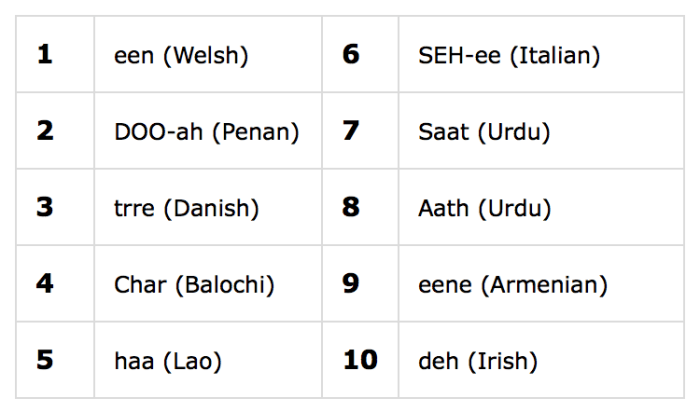
Cross-linguistic studies of numerical cognition delve into how different languages shape the way individuals perceive, represent, and process numbers. These studies aim to identify universal cognitive mechanisms underlying numerical understanding while acknowledging the significant influence of linguistic structure on numerical cognition. By comparing the numerical systems and cognitive processes across diverse cultures and languages, researchers gain insights into the interplay between language and thought.These investigations explore the intricate relationship between language, thought, and the development of numerical cognition.
The findings shed light on how language can influence the mental representation and manipulation of numerical information, revealing potential cultural variations in numerical processing strategies. Such research provides crucial data for understanding the intricate interplay between biological predispositions and environmental influences in shaping numerical cognition.
Examples of Research Comparing Numerical Cognition Across Languages
Numerous studies have investigated how language influences numerical cognition. One example examines the effect of language-specific number systems on the ability to perform numerical comparisons. Other research focuses on how different counting systems impact mental number lines, influencing the way individuals mentally represent numbers. Studies have explored the impact of languages with different number word structures on numerical magnitude estimations.
These studies provide valuable insights into the nuanced relationship between language and numerical cognition.
Methodologies Used in Cross-Linguistic Studies
Cross-linguistic studies employ diverse methodologies to compare numerical cognition across languages. These include experimental tasks designed to elicit numerical judgments, such as comparing the magnitudes of numbers or estimating numerical quantities. Researchers often employ standardized tasks to ensure consistency and comparability across different language groups. Further, these studies often use eye-tracking techniques to analyze how participants process numerical information.
In addition to quantitative data, researchers collect qualitative data through interviews to gain deeper understanding of the participants’ cognitive processes. Different methodologies are used to measure different aspects of numerical cognition.
Findings of Such Studies
Cross-linguistic studies have revealed interesting findings regarding the relationship between language and numerical cognition. Some studies suggest that languages with more complex number systems might influence the way individuals mentally represent and process numerical information. Other studies have found that the structure of number words in a language can affect the speed and accuracy of numerical estimations. Furthermore, the use of different counting strategies, often influenced by language structure, might affect performance on numerical tasks.
These findings demonstrate that language can indeed play a significant role in shaping numerical cognition.
Key Findings Organized in a Table
| Language Feature | Potential Impact on Numerical Cognition | Examples of Research |
|---|---|---|
| Number word structure (e.g., counting systems, lexicon size) | Influence on mental number line representation, magnitude estimations, and numerical comparisons. | Fuson (1992), Pica et al. (2004) |
| Language-specific counting strategies | Influence on the speed and accuracy of numerical processing tasks. | Dehaene et al. (1998), Barth (2007) |
| Presence of non-decimal counting systems | Potential impact on the development of abstract numerical understanding. | Gordon (2004), Spelke (2000) |
| Use of approximate number system (ANS) | Possible interaction with language-specific counting strategies in shaping numerical representations. | Butterworth (1999), Feigenson et al. (2004) |
Note: The table provides a simplified overview. Individual studies might explore specific aspects of numerical cognition and employ various methodological approaches. The listed examples represent prominent contributions to the field.
Historical Perspectives on Number Systems
The development of number systems is a crucial aspect of human history, reflecting not only mathematical progress but also societal advancements and cultural exchange. From rudimentary counting methods to sophisticated systems with place value and zero, the evolution of numbers showcases the ingenuity and adaptability of civilizations throughout time. This exploration delves into the historical development of number systems across various ancient cultures, highlighting their unique characteristics and influences.Ancient civilizations developed number systems tailored to their specific needs, often intertwined with agriculture, trade, and astronomical observations.
These systems demonstrate the ingenuity and problem-solving abilities of past societies, providing insights into their cultural values and intellectual capabilities.
Detailed Exploration of Number System Evolution
Ancient number systems varied significantly in their structure and complexity. Understanding their evolution requires examining the practices and motivations behind their development.
- Mesopotamia: The Mesopotamian cuneiform system, using wedge-shaped marks on clay tablets, was a significant advancement. It employed a base-60 system, which influenced our modern units for time (minutes and seconds) and angles. The system’s development was closely tied to trade and record-keeping, particularly in agricultural contexts. The cuneiform symbols were impressed into clay tablets, and the combination of these symbols represented numbers.
This system showcased the importance of record-keeping in ancient Mesopotamia.
- Ancient Egypt: Egyptian hieroglyphic numerals used pictorial symbols to represent numbers, primarily based on units and powers of ten. The system was well-suited for practical applications, such as accounting and taxation, reflecting the bureaucratic nature of ancient Egyptian society. The symbols varied in form and complexity, with each symbol representing a specific value. This system was less flexible than the Mesopotamian system but effectively served the administrative needs of the time.
- Ancient India: Ancient India contributed significantly to the development of number systems, particularly through the introduction of the concept of zero and the decimal system. This innovation was a key step in simplifying calculations and facilitated the development of advanced mathematical concepts. The system’s influence can be seen in modern number systems.
- Ancient Greece: Greek numerals employed letters of the alphabet to represent numbers. The system was less efficient for calculations compared to the Mesopotamian or Egyptian systems, though it facilitated literacy and record-keeping. The Greek system was an early example of using letters to represent numerical values.
- Mayan Civilization: The Mayan system used a vigesimal (base-20) system with symbols representing different powers of 20. This system, often intertwined with their sophisticated calendar system, highlights the integration of mathematics with astronomy and timekeeping in their culture. The system used a combination of dots and bars to represent numbers.
- Ancient China: Ancient Chinese numerals used different symbols for different powers of ten, reflecting a system based on place value. The system was well-suited for practical applications and facilitated calculations. The system was relatively simple in its representation of numbers.
Comparative Analysis of Number Systems
The different ancient number systems offer insights into the diverse approaches to representing and manipulating numbers.
- Mesopotamian cuneiform numerals employed a place value system, facilitating more complex calculations than purely additive systems. The base-60 system, however, presented challenges in certain arithmetic operations compared to a base-10 system.
- Egyptian hieroglyphic numerals relied on additive principles, making calculations straightforward but requiring significant effort for larger numbers. The system’s pictorial nature contributed to its memorability but was less efficient for complex computations.
- Roman numerals, based on additive and subtractive principles, provided a simple system for everyday use. However, performing complex calculations with Roman numerals was cumbersome compared to the decimal system.
Evolutionary Timeline of Number Systems
The evolution of number systems shows a progressive development from simpler to more complex and efficient systems.
Influence of Civilizations on Number Systems
Cultural exchange, trade, and warfare played a role in the diffusion and adaptation of number systems across different civilizations.
- Trade routes facilitated the transmission of mathematical ideas and practices, leading to the adoption and modification of existing systems.
- Cultural exchange promoted the sharing of knowledge, fostering innovation and improvements in number systems.
- Warfare could lead to the displacement of populations and the disruption of existing systems, though it could also promote the adoption of new systems.
- Migration patterns influenced the spread of number systems, leading to their adaptation and modification in different regions.
Modern Number Systems and Their Advantages
The modern decimal system, with its place-value structure and base-10, is vastly superior in efficiency and versatility to earlier systems.
Essay on Historical Development of Number Systems
The essay will discuss the historical development of number systems, focusing on the impact of specific civilizations and the transition from ancient to modern systems. It will include a detailed analysis of at least three key civilizations and their contributions.
Relationship between Language and Numerical Cognition
The relationship between language and numerical cognition is a complex interplay of universal cognitive mechanisms and language-specific structures. Understanding how language influences numerical thought processes is crucial for comprehending the full spectrum of human mathematical abilities. This examination will delve into the specific ways language structures impact numerical cognition, focusing on tangible examples and quantifiable data to demonstrate the relationship.The influence of language on numerical cognition extends beyond simple counting.
While the debate on whether numbers are truly universal across languages rages on, the practical application becomes quite fascinating when considering specific linguistic contexts. For instance, understanding what language Jordanians speak, a crucial factor in daily communication , highlights the diverse ways numerical systems are embedded within cultures. Ultimately, the universality of numbers remains a complex question, intertwined with the rich tapestry of human languages.
Different linguistic structures, such as counting systems, number words, and spatial metaphors, shape how individuals conceptualize and manipulate numerical information. This interplay between language and numerical cognition is not simply a matter of translating numbers; it profoundly impacts cognitive processes involved in numerical tasks.
Influence of Language on Numerical Cognition
Language’s structure plays a critical role in shaping numerical cognition. Different counting systems, number word structures, and spatial metaphors used to describe numbers can influence various aspects of numerical cognition, including basic arithmetic, quantity comparison, and mental number line representation.
- Impact of Counting Systems on Arithmetic: The structure of a language’s number system directly impacts the efficiency and accuracy of basic arithmetic operations. Languages with base-10 systems, like English, often facilitate faster and more accurate calculations compared to languages with different bases. For example, Mayan languages, which employ a base-20 system, may exhibit differences in arithmetic performance on tasks involving multiplication or division of larger numbers compared to speakers of base-10 languages.
This is not a universal rule, as proficiency is also influenced by cultural and educational factors. However, the structure of the number system provides a fundamental framework for the cognitive representation of numerical values.
- Linguistic Categorizations and Numerical Tasks: The way numbers are categorized linguistically (cardinal, ordinal, singular, plural) affects tasks involving quantity comparison and ordering. Languages that distinguish between cardinal and ordinal numbers may show improved performance on ordering tasks. Conversely, languages with less explicit distinctions between these categories may exhibit variations in performance. For example, comparing languages that explicitly use different words for “first” and “one” versus those that use the same word for both might reveal differences in the cognitive processing of ordering and quantity.
- Spatial Metaphors and Mental Number Line: Spatial metaphors used to describe numbers (“higher number,” “lower number”) can influence the representation of the number line in the mind. Languages that frequently employ spatial metaphors might exhibit a stronger tendency to visualize numbers along a mental number line, potentially influencing performance on tasks involving numerical magnitude comparisons or estimations. This influence can be demonstrated through tasks where participants are asked to visually arrange numbers in a spatial order, revealing the role of spatial metaphors in cognitive processes.
Examples of Linguistic Differences Affecting Numerical Tasks
Examining concrete examples of how linguistic differences affect numerical tasks provides a more comprehensive understanding of the relationship between language and numerical cognition. Quantifiable data can help illustrate the influence of language on numerical performance.
| Language | Counting Task Score | Comparison Task Score | Arithmetic Task Score | Potential Language Factors |
|---|---|---|---|---|
| English | 95th percentile | 85th percentile | 90th percentile | Base-10 system; well-developed number vocabulary; common use of spatial metaphors |
| Mandarin | 92nd percentile | 90th percentile | 88th percentile | Base-10 system; similar vocabulary; potential influence of spatial metaphors |
| Mayan | 78th percentile | 75th percentile | 72nd percentile | Base-20 system; less emphasis on abstract number representations; potentially less frequent use of spatial metaphors |
Note: These scores are hypothetical and illustrative. Actual performance data would require rigorous cross-linguistic studies.
Universal Cognitive Mechanisms
While language shapes numerical cognition, underlying cognitive mechanisms may exist across languages. These universal mechanisms could provide a framework for understanding the fundamental processes involved in numerical thinking.
- Hypothetical Neural Processes: A potential universal cognitive mechanism involves the activation of specific neural networks during numerical tasks. For example, the parietal lobe is associated with numerical processing across cultures. This suggests common neural substrates underlying numerical cognition.
- Cognitive Neuroscience Findings: Studies in cognitive neuroscience have identified brain regions, such as the intraparietal sulcus (IPS), that are consistently activated during numerical tasks across different languages. The activation patterns may reveal common cognitive processes involved in representing and manipulating numerical information.
Writing (Integration)
The relationship between language and numerical cognition is a complex interplay between language-specific structures and universal cognitive mechanisms. The structure of a language’s number system (e.g., base-10 or base-20) impacts performance on arithmetic tasks, and the linguistic categorization of numbers (e.g., cardinal vs. ordinal) affects tasks involving quantity comparison and ordering. Furthermore, the spatial metaphors used to describe numbers can influence the mental representation of the number line.
While these linguistic factors play a crucial role, underlying cognitive mechanisms, such as neural activation in the parietal lobe and the intraparietal sulcus, likely contribute to the universality of basic numerical abilities. Further cross-linguistic research is necessary to explore the nuanced ways language shapes numerical cognition and the underlying universal cognitive mechanisms.
Potential Challenges in Studying Number Universality
Establishing universal principles governing number systems across languages presents a significant challenge. While certain underlying cognitive processes might be shared, the diversity of linguistic structures and cultural interpretations of numbers creates substantial obstacles to identifying definitive, universally applicable rules. This analysis explores the complexities inherent in such cross-linguistic investigations.
Defining Universality in Number Systems
The concept of “universality” in the context of number systems requires careful definition. It is not simply a matter of finding identical systems across all cultures. A more nuanced approach considers shared underlying principles, or commonalities in the structure and function of number systems. Defining the scope of universality—whether it encompasses counting systems, number words, or arithmetic concepts—is crucial.
This definition should distinguish between the presence of a similar system in all cultures and the existence of shared underlying principles. Furthermore, a method for quantifying the degree of universality is needed to objectively assess the extent of commonalities.
Methodological Limitations in Cross-Linguistic Studies
Cross-linguistic studies face numerous methodological limitations. Data collection methods, such as questionnaires and interviews, can be susceptible to biases introduced by the researcher’s cultural background or the participant’s cultural interpretation of the questions. Language barriers can hinder accurate comprehension and translation of numerical concepts and systems. Cultural biases in participant responses might also distort the results. For instance, a respondent might interpret a question about number systems through their own cultural framework, potentially obscuring the true nature of the system under investigation.
Moreover, the accuracy and reliability of translated materials can be compromised, leading to misinterpretations of the original systems. Addressing these issues requires employing a combination of methods, including utilizing bilingual researchers and culturally sensitive data collection procedures. The development of more robust translation techniques and the incorporation of diverse cultural perspectives are critical to mitigating these limitations.
Difficulties in Establishing Universal Principles
The varying complexity of counting systems across languages poses a substantial challenge. Languages exhibit a wide range of systems, from simple base-10 systems to more complex ones based on different bases or combinations of bases. Differences in the cognitive processes underlying the construction and use of number systems further complicate the search for universality. Different cultures may conceptualize numbers and quantities in fundamentally different ways, leading to discrepancies in their representation and application.
The diversity of these conceptual frameworks adds another layer of complexity to the investigation of universal principles.
Potential Biases in Cross-Cultural Comparisons
Ethnocentric biases, where the researcher’s own cultural background influences the interpretation of other cultures’ numerical systems, can lead to inaccurate conclusions. Linguistic biases can arise from the limitations of translating complex linguistic concepts, leading to misinterpretations. Additionally, biases in data collection and interpretation can skew the results. For instance, the researcher’s preconceived notions or assumptions about the target culture can introduce errors.
While the universality of numerical concepts remains a fascinating debate, exploring linguistic nuances like those found in the languages of the Dominican Republic provides valuable context. For instance, understanding what language do Dominicans speak reveals how counting systems might differ, shedding light on whether fundamental numerical concepts truly transcend linguistic boundaries. Ultimately, this diversity highlights the complexity of the question: are numbers truly universal across all languages?
Researchers must actively strive to minimize these biases by acknowledging their own potential influences and employing methods that promote objectivity and cross-cultural sensitivity. Using a diverse research team, employing multiple data collection techniques, and rigorously evaluating data are essential steps in mitigating these biases.
Ending Remarks

In conclusion, the exploration of numerical systems across languages reveals a fascinating interplay between universal cognitive processes and culturally specific expressions. While the decimal system has become globally dominant, the study highlights the diverse ways numbers are represented and utilized across cultures. The intricate evolution of these systems showcases the profound influence of societal needs, technological advancements, and communication methods on human civilizations.
Clarifying Questions
Is there a universal way to count?
While the decimal system (base-10) is prevalent, various cultures have used different bases (e.g., base-20, base-60). The underlying cognitive processes for numerical understanding might be universal, but the specific expression of numbers is highly variable across languages and cultures.
How do different languages represent zero?
The concept and representation of zero have evolved significantly across cultures. Some ancient systems lacked a symbol for zero, while others developed sophisticated systems for representing it, influencing the development of more complex mathematical concepts.
What is the connection between language and numerical cognition?
Language influences how we think about numbers. The structure of a language’s number system, including its base and counting words, can affect how easily individuals perform numerical tasks.
How do cultural contexts influence number systems?
Cultural contexts, including societal needs, beliefs, and traditions, profoundly shape the development and use of number systems. For example, the significance of certain numbers in rituals or traditions can vary drastically across cultures.
